fintech IRELAND
email / social
  • Home
  • Fintech Authorisations
  • Fintech Education & Training
  • Fintech Ireland Map
    • Fintech Survey
  • Events
    • Summit
    • Events-Archive
  • Fintech Hub
  • News-Insights
    • Consultations
    • News Page Back Up
  • Careers
  • RegTech
  • CRYPTO
  • Fundraising
  • Brexit & Ireland
  • About
    • Fintech Family Network
  • Get Involved

Ostia Solutions - Guest blogs by John Power

15/6/2018

0 Comments

 
Picture
Many thanks to John Power, CEO, Ostia Solutions for permission to carry extracts from his recent blogs.  John is a technical entrepreneur with a track record in the successful creation, growth and sales of technology companies. His vision has led to the Portus technology and inception of Ostia Solutions.  John is also a Member of the Steering Committee at The Irish Centre for Cloud Computing and Commerce (IC4).

Twitter: @ostiasolutions
 ​

​What is Open Banking and how does it relate to PSD2?
Picture
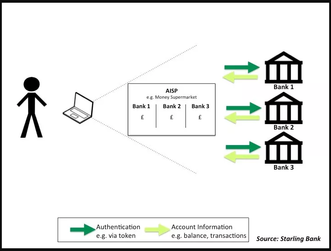
There is much talk in banking circles about what is being called ‘Open Banking’, but what does this mean to consumers, banks and intermediaries and what is the relationship with the EU’s Payment Services Directive V2 (PSD2)? In this series of blogs we will attempt to explain what this means to the different parties and what we are seeing happening in the market around these initiatives.

The concept of Open Banking is being used around the world to describe the goal to make banking more dynamic. In the past, people often opened a bank account with one bank and stuck with that bank for the rest of their lives. Banks often used that fact to ensure that their systems and processes were extremely closed making it extremely difficult to move accounts from bank to bank or use the services of another bank. It also meant using different applications to access information from each different bank.
​

Governments have pushed banks through regulation to make it much easier to switch between providers. While the banks resisted this in the past, it is now a fact of life and the banks know to support this they will need to make their IT systems and processes more accessible. In parallel to this has come a technological revolution enabling consumers to do far more than ever was thought possible on mobile devices. As the banks are now being targeted by high tech, so called ‘challenger banks’, they are attempting to open up their systems for use by small, agile and clever organizations (commonly known as ‘Fintechs’) building products around those banks.

Continue reading at 
https://www.ostiasolutions.com/blog/blog/97-psd2-and-openbanking

​What Does Open Banking Mean to Consumers?
Picture
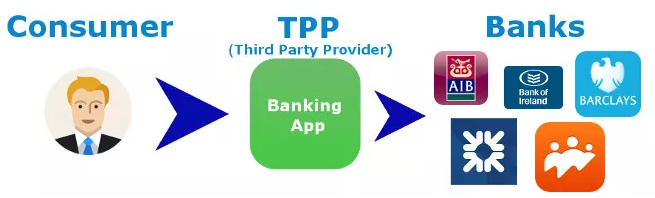
​The introduction of Payment Services Directive 2 (PSD2) brings a lot of change for financial institutions, but what does Open Banking mean for the consumer?

Open Banking as a concept is targeted such that individuals or large and small businesses can benefit from it. Many use the analogy of what the ‘Open Skies’ policy did for air travel in Europe. ‘Open Skies’ opened up air travel to a wider group of people through competition and resulted in a significant reduction in fares. In this blog we try to foresee what ‘Open Banking’ could mean to your average consumer.

Access to Accounts in one Place
The most obvious benefit will be an ability to see all of your financial information in one place. At the moment, taking the simplest example, when you have bank accounts with different banking institutions, you generally need to install and use multiple applications to see your accounts. When extended to credit cards and mortgages, many banks don’t always offer an ability to see these online. Consider that in the future, Open Banking will offer you an opportunity to see your current financial position in a single application on your phone.

Continue reading at https://www.ostiasolutions.com/blog/blog/98-what-does-open-banking-mean-to-consumers

What Does Open Banking / PSD2 Mean to Banks?

Picture
Many banks have been toying with Open Banking for a number of years now as a way to improve the customer experience, however, they are generally trying to do this only for their own customers. As a concept, this is almost diametrically opposed to what Open Banking is supposed to offer, however, now that the EU has provided the stick that is PSD2 (Payment Services Directive 2), the banks must open up their data to authorized individuals. In this blog we will discuss the issues for the banks and how they might eventually deal with them.

Security and Culpability
This is potentially one of the things that keeps most bankers awake at night. The potential is there for someone to compromise their security and thus steal many millions of euro from customer accounts or simply even customer data with GDPR (General Data Protection Regulation) on the horizon. In the past, only the bank and its own internal applications and some select external partners could access the data. This enabled them to ensure a belt and braces attitude to security and avoid any potential breaches. Most have now moved to include behavioural monitoring to determine if unexpected behaviour is seen on an account. As they open up access to their data, monitoring this will become even harder as determining what is ‘unexpected behaviour’ on an account will be even more difficult as Third Party Providers (TPPs) will find new and unusual ways to use the data to which they have been given access. This is a major challenge for the banks at the moment.

Continue reading at https://www.ostiasolutions.com/blog/blog/99-what-does-open-banking-psd2-mean-to-banks

​Open Banking Ecosystems and Developer Portals Being Delivered by the Banks

Picture

As Open Banking / PSD2 comes into force, the banks that have embraced open banking (and fintech in general) as an opportunity rather than a threat are attempting to engage with the development community, both individual developers and larger development organizations. It is through this engagement that these banks are hoping to benefit from the world of open banking. We will discuss how and why in this article.

What is an Open Banking Ecosystem?

The banks are keen to attract developers and organizations of all sizes to their Application Programming Interfaces (APIs). Many are attempting to create an Ecosystem supporting developers and enabling them to on board and engage with the banks in as frictionless a way as possible. This Ecosystem can consist of a number of things:

  • Open and informative online content about what APIs the bank have available and what they are planning.
  • Documents, white papers and training materials to enable developers to interact easily with the bank’s APIs.
  • Online forums where developers and the bank can engage in open discussion about what is good and bad about the ecosystem so that it can be improved.
  • Workshops, where appropriate, to work through issues with developers.
  • Hackathons, where developers of all sizes can show their skills and socialise their ideas.
  • The final, and most important part of this ecosystem, is the Developer Portal.

Continue reading at 
https://www.ostiasolutions.com/blog/blog/100-open-banking-ecosystems-and-developer-portals-delivered-by-banks
0 Comments

Irish Times Special Report: Cybersecurity and Fintech (26/04/18)

31/5/2018

0 Comments

 
Picture
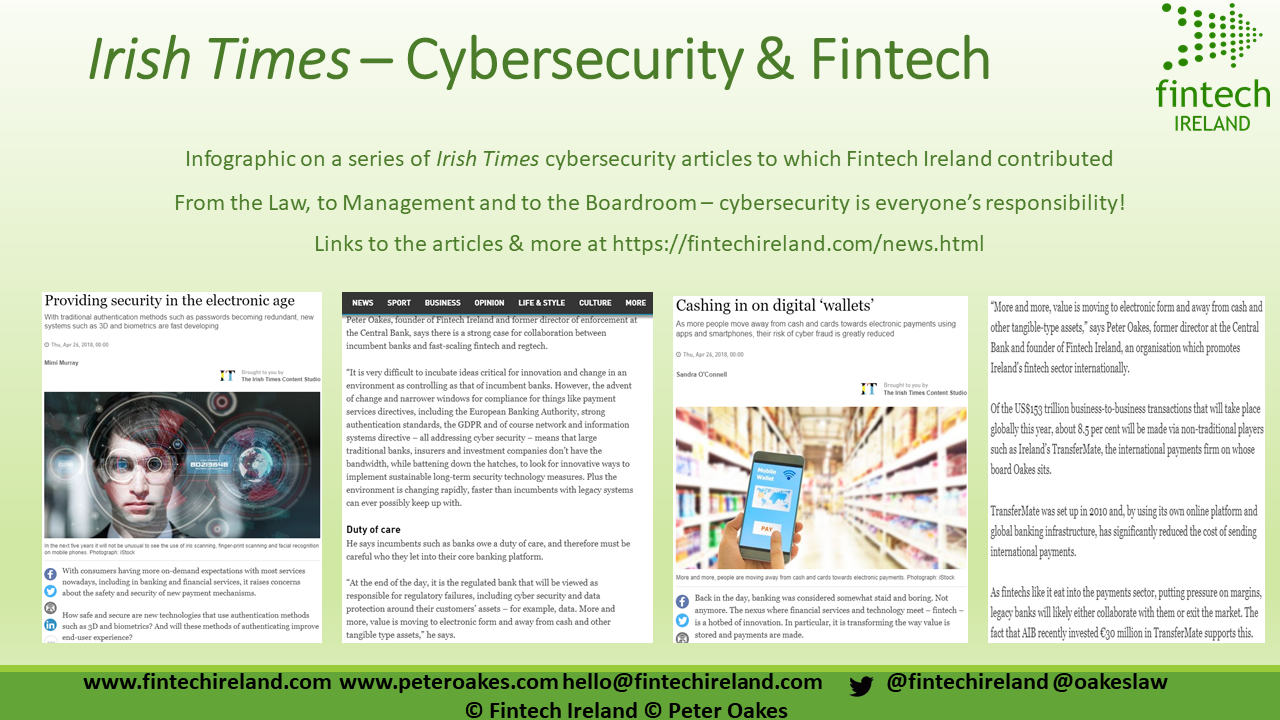
Fintech Ireland contributed to the following articles in the Irish Times:

Providing security in the electronic age
With traditional authentication methods such as passwords becoming redundant, new systems such as 3D and biometrics are fast developing
  • Peter Oakes, founder of Fintech Ireland and former director of enforcement at the Central Bank, says there is a strong case for collaboration between incumbent banks and fast-scaling fintech and regtech.
  • Of the €153 trillion of value of business-to-business transactions which will occur in 2018, 8.5 per cent (or $13 trillion) will be via non-traditional players such as Ireland’s TransferMate, which is cited in the recent White Paper on Big Money B2B Transfer.
Thursday, Apr 26, 2018 by Mimi Murray
Download PDF here
Read on Irish Times here 
​
Building the human firewall
People are more important than technology when it comes to cyber security 
  • Peter Oakes of Fintech Ireland agrees. “Very often it’s not the original issue that arose from the breach that’s the problem it’s the cover-up,” he says. And the consequences for companies which are perceived to have been less than forthcoming can be very serious.
  • “The markets are very unforgiving,” he notes. “Just look at the downward spiral in tech stocks following the Facebook/ Cambridge Analytica disclosures. Organisations need to have the right protocols in place for what people do following a breach.”
Thursday, Apr 26, 2018 by Barry McCall
Download PDF here
​Read on Irish Times here

GDPR: where does it sit in the cyber security mix?
The advent of the EU General Data Protection Regulation could actually make organisations become more cyber secure  
  • Peter Oakes points to another area which some people may have overlooked. In the burgeoning fintech space, there is an increasing number of applications which are transmitting people’s personal and banking details between different organisations. 
  • “When a customer is uploading information it’s not just where and how it’s stored and used that matters, it’s at the point of transmission that it must be safe and secure,” he says. “I’m not sure if I would be comfortable that this is the case with all the applications out there.” Perhaps GDPR will address this issue as well.
Thursday, Apr 26, 2018 by Barry McCall
Download PDF here
​Read on Irish Times here 

Cashing in on digital ‘wallets’
As more people move away from cash and cards towards electronic payments using apps and smartphones, their risk of cyber fraud is greatly reduced
  • Of the US$153 trillion business-to-business transactions that will take place globally this year, about 8.5 per cent will be made via non-traditional players such as Ireland’s TransferMate, the international payments firm on whose board Oakes sits.
  • TransferMate was set up in 2010 and, by using its own online platform and global banking infrastructure, has significantly reduced the cost of sending international payments.
Thursday, Apr 26, 2018 by Sandra O'Connell
Download PDF here
​Read on Irish Times here
 

0 Comments

Insights on the regulatory landscape: Brexit, Asset Management & Fintech (Central Bank of Ireland)

3/5/2018

0 Comments

 
Picture
We must be proactive in our engagement with industry in order to understand the opportunities and risks presented by the spread of FinTech

In a speech to delegates of the FOW Trading Dublin conference in Dublin today (3 May 2018), Michael Hodson, Director of Asset Management Supervision at the Central Bank of Ireland addressed a number of topics including Asset Management, Brexit risks & Fintech.

Link to speech in PDF format
Link to speech at Central Bank of Ireland

Bruneau Joseph (Non-Executive Director, FC Stone) excellent BREXIT presentation is available here.
​

Fintech Ireland media partnered with FOW Trading Dublin and our Peter Oakes moderated the Expert Brexit Panel, including:

  • Paul Lack, CEO, Met Facilities 
  • Christian Donagh, Partner, Matheson 
  • Bruneau Joseph, Non-Executive Director, FC Stone 
  • Kieran Donoghue, Global Head of International Financial Services, Strategy & Public Policy, IDA
  • Brian Hayes, Member, European Parliament

0 Comments

Three Ways Fintechs are missing the mark with marketing

27/4/2018

0 Comments

 
We are delighted to have another guest blog on Fintech Ireland.  This guest blog is courtesy of Shannon Eastman (linkedin / twitter ) of Teach A Brand To Fish (​[email protected]) ​
Picture
No wonder #FinTechMarketing has nearly 80% of business owners shaking their head in dismay, and less than 20% pouring a Red Breast to celebrate a successful campaign.

All of us are on board with be better and do better, but, when it comes to the mystery of marketing, where does one (with zero time, people and cashflow) even begin?

As we get stuck into the 3 ways #FinTechs are missing out with marketing, there is a random one that I’ve seen only a couple times in the last 5 years, but is by far one of the most dangerous and costly.

It is this; to bring in a marketing resource, and then Wash. Your. Hands. Of. It.
Business Owners of the world, who shudder at the thought of touching marketing, let alone, getting up close and personal with it; this is not cool, or responsible, or smart. 

Right, 3 ways FinTechs are missing the mark, with marketing.

1. Commercially grown-up marketing, or bust!
If you are not anchoring your #FinTech marketing efforts, firmly inside commercial targets 12-mths out, you’re hamstringing yourself before you rock up to the starting line. FACT.

A grown-up Marketer will insist on knowing your incremental revenue targets 12-months out. Here’s why.; Your 12-month, incremental revenue target tells me almost 60% of your marketing strategy.

Let’s use an example to illustrate the point. FinTech_A has a revenue target of €600k over the next 12months. In this example, that means April 18 through to March 19.

Marketing insight one: your marketing budget. 

Your marketing budget for the year is €60k spread across the year.

Consider that, 10% of your total revenue, amortised over 12-months is your required marketing budget. That means, if you want >€5m in incremental revenue over 12-months, and you would struggle to find 25k to invest in marketing in that year, then chances are, you’re living more in a fantasy, and less in reality. Although, nothing that a wee bit of clarity can’t resolve.

Marketing insight two: size of your marketing effort this year.
The average transactional value of a client over 1 year is needed. In this example, let’s say that value is €100k.

There is a Buy:Ratio – 1:20. It states that for every 20, perfect-for-you-clients that you get in front of - 1 will buy you. (Where did that come from? Us, doing this for 100 years. Turns out when you focus on fixing one problem over 100 years, you get to see a few patterns yourself.)

So in our example, a €600k target, means a €60k marketing budget to locate 6 clients who each buy a €100k widget.
 
The size of our marketing plan is then 1:20 or 6: 120. That means, we want to put you in front of 120 perfect for you clients in order to get 6 to buy you. Of course, this is calculated for a 12-months period.

If we break it down further, (keeping numbers whole), we find that we want marketing to be a freaking wizard at doing the following:
  • 40 prospects per quarter
  • 14 prospects per month
  • 4 prospects per week
  • 1 prospect per day

How do I know this? I’ve been doing this for 100 years. I’m specialised in working with business owners, who have a marketing dept. of one – and doing this for so long, means you get to spot the odd pattern or two.

If you’re curious to know how we would invest your marketing budget over 12-months, we have a free-90-minute, bespoke-to-you, marketing workshop for that. Details here. 

Continue reading Shannon's wonderful insights at ​https://www.teachabrandtofish.com/single-post/2018/04/24/3-ways-FinTechs-are-missing-the-mark-with-marketing
Picture
Shannon Eastman, Chief Action Taker at Teach A Brand To Fish
0 Comments

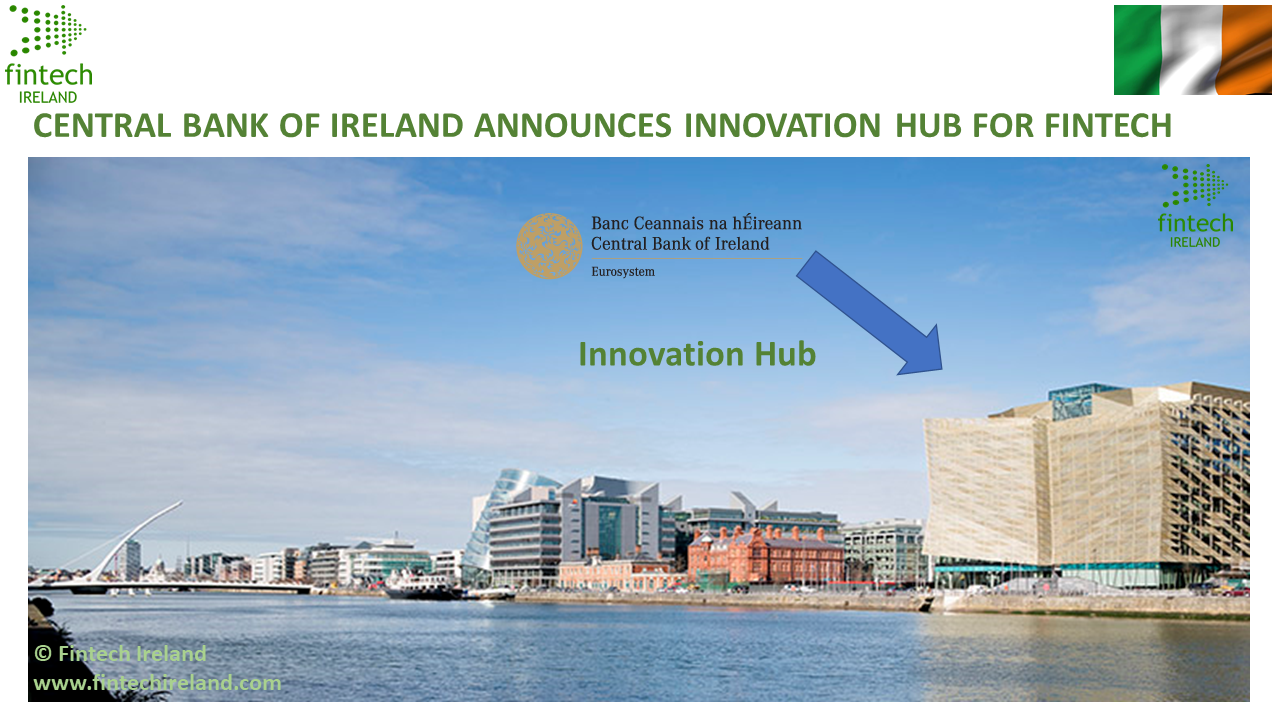
CENTRAL BANK OF IRELAND ANNOUNCES INNOVATION HUB FOR FINTECH

20/4/2018

0 Comments

 
Picture
  • Central Bank announces new Innovation Hub to engage directly with firms interested in FinTech and its implications for regulation
  • Industry Engagement Programme will see regular FinTech Roundtables being hosted by the Central Bank for interested parties, starting later in 2018 
  • New resources will give firms a way to engage with the Central Bank outside of more formal regulatory interactions

In a speech at UCC’s Financial Services Innovation Centre this morning, Derville Rowland, Director General, Financial Conduct, announced that the Central Bank will launch an Innovation Hub and an industry engagement programme to keep step with the evolving FinTech and regulatory landscapes.

In her speech, she said: “Engagement with the people developing new technologies gives us first-hand knowledge of the innovations they are developing. In turn, this enhances our understanding of any potential risks and, importantly, potential mitigants.  Of course, we also need to listen to existing firms that are becoming increasingly innovative and technology-based.”

She added that the unit will focus on engagement, sharing and listening, and will be a two-way street, underpinned by an Industry Engagement Programme: “Our industry engagement programme is founded on the idea that good outcomes are driven by active engagement.”
Both new and existing firms will be able to engage directly with the Central Bank through new specific contact points. Derville Rowland said: “This will start a conversation. It will give firms a way to engage with us outside of more formal regulatory interactions.  In so doing, the Central Bank will be able to learn from the firms about their ideas, the technologies they are developing, and have a view to where financial services are heading.” 

Firms will be able to contact the Central Bank at [email protected] with questions.
 
“The centrepiece of our new industry engagement programme will be FinTech Roundtables hosted by the Central Bank starting later in 2018.  The Roundtables will bring together relevant stakeholders to discuss issues relevant to FinTech and innovation. They will be a forum for conversation where we can all learn from each other and share issues and ideas. Given the pace of change in the FinTech space, we understand the importance of holding these Roundtables regularly.”
​
Concluding, she said: “Industry engagement does not end with inviting stakeholders into our offices at North Wall Quay.  We will be pro-active in seeking out engagement, and not simply waiting for it to come to us.  We will be out at events and meeting with innovators.  Importantly, we want to be, and will be, accessible.”

0 Comments
<<Previous
Forward>>

    Author

    Fintech Ireland

    Archives

    December 2026
    June 2026
    May 2026
    March 2026
    December 2025
    October 2025
    September 2025
    July 2025
    March 2025
    February 2025
    January 2025
    December 2024
    November 2024
    October 2024
    July 2024
    June 2024
    May 2024
    April 2024
    March 2024
    February 2024
    December 2023
    November 2023
    October 2023
    September 2023
    August 2023
    July 2023
    June 2023
    May 2023
    April 2023
    February 2023
    October 2022
    July 2022
    June 2022
    April 2022
    March 2022
    January 2022
    December 2021
    July 2021
    May 2021
    April 2021
    March 2021
    February 2021
    January 2021
    November 2020
    October 2020
    September 2020
    August 2020
    July 2020
    April 2020
    February 2020
    July 2019
    April 2019
    March 2019
    February 2019
    January 2019
    October 2018
    September 2018
    July 2018
    June 2018
    May 2018
    April 2018
    March 2018
    January 2018
    October 2017
    September 2017
    August 2017
    July 2017
    June 2017
    May 2017
    March 2017
    January 2017
    December 2016
    November 2016
    September 2016
    August 2016
    July 2016
    June 2016
    May 2016
    April 2016
    March 2016
    February 2016
    December 2015
    September 2015
    July 2015
    June 2015
    May 2015
    April 2015
    March 2015
    September 2014
    January 2014

    Categories

    All
    Account Information Services
    AISP
    Anne Boden
    Authorisations
    #bankinginquiry
    Bank Of England
    Bitcoin
    Brian Fahey
    British Embassy Dublin
    Business Post
    CB Insights
    Central Bank Of Ireland
    Challenger Bank
    Chambers And Partners
    Competition And Consumer Protection Commission
    Compliance
    Consultations
    Contributor Articles
    Corporate Governance
    Crowdingfunding
    Crypto Assets
    Cryptocurrencies
    Currency Fair
    Cyber Security
    DeFi
    Department Of Finance
    Digital Assets
    Digital Euro
    Digital Wallets
    Directors Duties
    Disruption
    Dogpatch Labs
    Electronic Money
    EML Payments
    EMoney
    European Commission
    Financial Literacy
    Fintech
    Fintech Abu Dhabi
    Fintech Hub
    Fintech Ireland
    Fintech Ireland Map
    Fintech Ireland Summit
    Fintech Leaders Series
    Funding
    Funds
    Gemini
    Ifs2020
    Ifsc
    Innovation
    International Financial Services Strategy
    Ireland For Finance
    Irish Fintech Companies
    John Berrigan
    Kraken
    Mairead McGuiness
    Marketplace
    MiCA
    Mifid
    Moneycorp
    Money Laundering
    Monzo Bank
    MoonPay
    MyComplianceOffice
    Neobanks
    Newsletter
    Nuapay
    @oakeslaw
    OFX Payments
    Paschal Donohue
    Payments
    Payments Institution
    Paysafe
    Payward
    Peer To Peer
    Peer-to-peer
    Realex Payments
    Regtech
    Regulated Fintech
    Regulation
    Roboadvisers
    Robo Advisors
    Robo-advisors
    Ronan Gallagher
    RTE
    Sandbox
    Sentenial
    Simon Harris
    Square
    SquareUp International
    Stablecoins
    Starling Bank
    Strategy
    SYNC Payments
    The Project Foundry
    TransferMate
    Unicorn
    Unicorns
    USA Today
    Virtual Assets
    Wealthtech
    Zodia Custody
    Zodia Markets

©Fintech Ireland and ©Fintech.  Fintech Ireland (523657) and Fintech (523656) are registered with the Companies Registration Office in Ireland
www.fintechireland.com / www.fintechireland.ie / www.irishfintech.ie / www.irishfintech.com / www.fintechcareers.ie
Privacy Policy